Become a Smarter Buyer!
 I
am frequently contacted by individuals who are interested in, or have
already purchased an antique phonograph, and who are concerned about the
originality and/or condition of the machine. Some may feel 'ripped-off' by paying an exorbitant price for a common machine they found at
an antique store or dealer. Given the volume of emails received
daily, responding to each request is impossible (although I do make it a point to respond
to a few every day). Antique
phonographs, and the antique market in general, is very fickle. Selling prices depend
on the economy, collector interest, an excess of supply, and most importantly, the quality of the
piece itself. This guide will provide some of the basic pointers to be
aware of BEFORE making a purchase from any source (including us!!).
I
am frequently contacted by individuals who are interested in, or have
already purchased an antique phonograph, and who are concerned about the
originality and/or condition of the machine. Some may feel 'ripped-off' by paying an exorbitant price for a common machine they found at
an antique store or dealer. Given the volume of emails received
daily, responding to each request is impossible (although I do make it a point to respond
to a few every day). Antique
phonographs, and the antique market in general, is very fickle. Selling prices depend
on the economy, collector interest, an excess of supply, and most importantly, the quality of the
piece itself. This guide will provide some of the basic pointers to be
aware of BEFORE making a purchase from any source (including us!!).
While it is impossible to cover all aspects of evaluating a phonograph, the tips below should serve as a starter-guide for buyers, as well as to describe some 'danger signs' to indicate that a machine may not be a good value.
The Market Today:
 The value of many antique
phonographs has dropped significantly since 2005, and this phenomenon is also
experienced in many other collector/hobby markets. The size of the antique phonograph
collecting community has decreased in
recent years; younger people are not much interested in "collecting", and quite
frankly, often don't have the available funds to purchase antiques as a hobby.
Most observers predict that this situation won't improve anytime in the
near future, but interest may surge again for future generations. Buyers should bear in mind that phonographs were produced by the
tens of millions in the early years of the 20th Century, and tens of
thousands have
survived. And, just as is the case today, there were certain models that were highly affordable and exceptionally
popular, which were produced in huge quantities. Online listings such as Craigslist
and eBay have flooded the market with all kinds of common
phonographs, which has further driven down prices. Victrola (internal horn)
models that were originally produced in large quantities are still commonly found at estate
sales and online, and will rarely sell for more than a few hundred
bucks. Excellent unrestored examples (in original condition) always bring
more money, as they are far harder to find. Authentic
external-horn Victors remain in considerable demand, and have higher
valuations.
Readers occasionally become
upset or angry to learn that their old Victrola XI is worth only $100.00, because they
have seen the "same model" with an asking price of $3,000.00 on eBay. Just remember:
sellers can ask any price they wish, and a crazy price tag means absolutely nothing in the
marketplace. If the phonograph doesn't actually sell for $3,000.00, then the asking price
was too high. And the vast majority of common models listed online never sell at any price (less than
4% of the antique phonographs listed on eBay are ever sold). If you see "some old phonograph" get appraised for $5,000.00 on
Antiques Road Show or Pawn Stars, it is likely a
very rare and desirable example. If your phonograph isn't that particular model, with that
particular finish, in that particular condition, then it probably won't be worth
$5,000.00. And many of the prices quoted on popular reality TV shows are
incredibly inflated; the average person would never come close to realizing such
high "valuations" unless they owned a large retail store with lots of unwitting
customers passing through. The
marketplace is the best judge of worth. Value is based solely on rarity,
condition and demand. It represents what a reasonable and knowledgeable buyer
will pay in the current market. That is why I use
statistical estimates of value based on real sales data from all sources
when establishing fair selling prices.
The value of many antique
phonographs has dropped significantly since 2005, and this phenomenon is also
experienced in many other collector/hobby markets. The size of the antique phonograph
collecting community has decreased in
recent years; younger people are not much interested in "collecting", and quite
frankly, often don't have the available funds to purchase antiques as a hobby.
Most observers predict that this situation won't improve anytime in the
near future, but interest may surge again for future generations. Buyers should bear in mind that phonographs were produced by the
tens of millions in the early years of the 20th Century, and tens of
thousands have
survived. And, just as is the case today, there were certain models that were highly affordable and exceptionally
popular, which were produced in huge quantities. Online listings such as Craigslist
and eBay have flooded the market with all kinds of common
phonographs, which has further driven down prices. Victrola (internal horn)
models that were originally produced in large quantities are still commonly found at estate
sales and online, and will rarely sell for more than a few hundred
bucks. Excellent unrestored examples (in original condition) always bring
more money, as they are far harder to find. Authentic
external-horn Victors remain in considerable demand, and have higher
valuations.
Readers occasionally become
upset or angry to learn that their old Victrola XI is worth only $100.00, because they
have seen the "same model" with an asking price of $3,000.00 on eBay. Just remember:
sellers can ask any price they wish, and a crazy price tag means absolutely nothing in the
marketplace. If the phonograph doesn't actually sell for $3,000.00, then the asking price
was too high. And the vast majority of common models listed online never sell at any price (less than
4% of the antique phonographs listed on eBay are ever sold). If you see "some old phonograph" get appraised for $5,000.00 on
Antiques Road Show or Pawn Stars, it is likely a
very rare and desirable example. If your phonograph isn't that particular model, with that
particular finish, in that particular condition, then it probably won't be worth
$5,000.00. And many of the prices quoted on popular reality TV shows are
incredibly inflated; the average person would never come close to realizing such
high "valuations" unless they owned a large retail store with lots of unwitting
customers passing through. The
marketplace is the best judge of worth. Value is based solely on rarity,
condition and demand. It represents what a reasonable and knowledgeable buyer
will pay in the current market. That is why I use
statistical estimates of value based on real sales data from all sources
when establishing fair selling prices.
Note that in some instances, value does not always correspond with rarity. This is due to the fact that some machines are considered more collectible than others, for example, external horn Victors will usually bring more money than many low-production internal-horn Victrola models. Major exceptions are machines with unusual finishes, or which are in truly mint original condition.
Phonographs which were originally very expensive, or which are particularly ornate (e.g. hand-carved trim, hand-painted ornamentation, or featuring unique veneers), or which were made in the very early years of production still hold value very well. External horn machines in good original condition have also maintained reasonable value, since the demand remains high.
CONDITION IS EVERYTHING. "Excellent Original" means near-flawless with an original finish. It does not mean refinished, scuffed-up, scratched and dented, faded or worn. This offends many sellers, but it is the truth of the antique market. Just because you have something that looks old and is not beat to death does not mean it is in 'excellent condition'. A common machine that is 120 years old and still looks like new is an unusual find. A low-production machine that is original and still looks like new is a REAL find!!
Considerations for Purchase:
A. The buyer must assure that the machine is a true antique, and not a modern 'clone' made to look old. Click here for more information.
B. Don't get sucked-in with seller's flowery claims such as "this is a rare historical artifact" or "this timeless piece will bring back haunting memories" or "this machine has been lovingly restored to look like new". Yes, there certainly are some very rare phonographs out there, but many upright models were made in the millions, and tens of thousands are still around. Be careful what you are buying. You can easily pay $2,000.00 for a machine that is worth less than $100.00.
C. The buyer must determine if the machine is correct, meaning that it has authentic mechanics, hardware components and cabinet parts that would have been installed by the factory when it was new. Has it been altered or updated? Click here for more information.
D. Original (unrestored) machines will almost always maintain higher value than a machine that has been refinished, even if the restoration was correctly executed. A very common machine (like a VV-XI) will not be very valuable in today's market...but the value will likely be reduced if the machine has been well refinished. If it has been incorrectly restored, it will probably be relegated to the role of "parts donor" in the future. No smart collector will buy a common Victrola that is poorly redone for anything but parts. Why would they do so, when an excellent original example can be had for a hundred bucks? A smart buyer must make a determination if the phonograph is in original condition, or if it has been wholly or partially restored/refinished. Click here for more information.
E. If it has been refinished, then the quality of the restoration must be determined. Click here.
F. If the machine has an original finish, the buyer should make a judgmental comparison between an imaginary machine which is "brand new" and the one being evaluated. This determines the true condition of the machine. Click here.
G. Finally, determine the 'State of the Market'; the antique phonograph market fluctuates over time, due to many factors. Click here.
The vast majority of readers who submit information or questions to our website consider their antique phonograph to be in "excellent" or "mint" condition. Unfortunately, from an appraisal standpoint, less than 5% of the surviving phonograph population would fall into these two categories (combined).
We believe that a smarter buyer is a better customer, even if that buyer purchases a machine from someone other than us. Uninformed buyers usually pay far too much for common or misrepresented machines, and can't hope to ever recoup their investment.
Why Buy a Victor Product?
Readers should know by now (from the GETTING STARTED section) that this website is limited to phonograph products made by The Victor Talking Machine Company. While there are many fine machines made by Edison, Columbia, Sonora and scores of others, we restrict our focus on Victor phonographs because:
- Victor (and Victrola) is the best recognized brand of early phonographs. This is an undeniable statement even though Victor did not 'pioneer' the invention and commercialization of 'talking machines' (that feat was achieved by Edison), nor did they invent the flat disc record (achieved by Berliner). They did aggressively improve and market these machines through a very well-considered business strategy, and reduce the cost of production to make them affordable products in most homes by 1910. Almost everyone still recognizes "Nipper" (from the trademark logo) and the name "Victor" even more than 100 years later. Victor became the "Big Dog" in the phonograph business for good reason.
- Victor always maintained a very high standard of product quality. While some other makers illegally copied Victor's designs (or designed 'work-around' products to avoid patent infringement) and made cheap 'clones' from substandard materials, Victor refused to compromise function, fit or finish of their products. Also, unlike some other makers, Victor remained in-business as a viable and profitable independent company from their formation in 1901 until RCA bought them out in 1929. Many other brands went bankrupt or transitioned to making other products.
- Original parts are readily available for Victor products, and good reproduction parts can be found if needed. In addition, a great deal of research has been ongoing to better understand Victor's history, providing us with much more information than is available on other brands.
- Victor products often have a more substantial and crafted appearance than phonographs from some other manufacturers. They 'stand out' well in a home, and everyone recognizes the brand logo!
Making A Decision:
 First, decide what you want. Do you have adequate room for
a large console machine, or for a tabletop phonograph with a large external
horn that extends well beyond the machine's cabinet? Do you have a desired
date of manufacture (e.g. late
1900's, early 1920's, etc.)? Is originality important to you, or do you just
want something that 'looks nice'? What is your budget?
First, decide what you want. Do you have adequate room for
a large console machine, or for a tabletop phonograph with a large external
horn that extends well beyond the machine's cabinet? Do you have a desired
date of manufacture (e.g. late
1900's, early 1920's, etc.)? Is originality important to you, or do you just
want something that 'looks nice'? What is your budget?- It is absolutely true that with enough time and effort, you may find a tremendous buy on a legitimate and desirable phonograph at local auctions, flea markets, via Craigslist, and searching other venues. But you must have the time and knowledge to do the scrounging and running around to find a correct machine. You also need to be knowledgeable on originality, correctness and current market conditions. Then you must tackle any repair and restoration work that may be required.
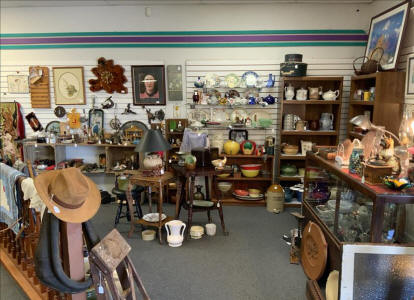
- If you are looking for a 'turn-key' phonograph (e.g. a machine that is fully functional and historically correct) which is accurately represented and fairly priced, look for reputable, established selling sources. The corner antique store or antique restoration service is rarely a good choice for these purchases, as the owner may not be well versed in the subject of phonographs, and prices are often inflated. Many sellers will represent marginally restored machines as original. Some may swap-out dataplates or components, in an attempt to make the machine appear 'rarer' than it is. There are certainly some very good antique phonograph dealers out there, but many are out to take advantage of new or uninformed buyers.
- Do you want a machine that is warranted? Some dealers will sell only 'as-is' and others can provide a variety of warranty coverage in case a spring breaks or the machine does not operate properly.
- What condition is acceptable? Do you want a near-perfect example, or is a somewhat 'toasty' and well-worn appearance OK?
- Be a smart buyer. Don't fall for modern replicas, over-restored or poorly-restored machines, 'Frankenphones' (made from components taken off various machines), machines priced far above market values, or the promotions of outright swindlers.
- Again, most importantly, the marketplace is the best judge of true worth. Value is based on rarity, condition and demand. It represents what a reasonable and knowledgeable buyer will pay in the current market.