Determining Market Conditions
The antique phonograph market (and antique collecting in general) has taken a hit in recent years. Demand has dropped due to changes in the economy and stagnation in the hobby. Older collectors are passing on, and younger collectors are not appearing to fill the void; large collections are subsequently being dumped on the market, and buyers have become increasingly scarce. As a result, the current supply of phonographs exceeds the demand. The ever-expanding availability and visibility of phonographs on venues such as Ebay, Craigslist and Proxibid have also flooded the market. No doubt about it, the internet has profoundly changed this hobby. The sad fact is that only about 5% of the antique phonographs listed on Ebay actually sell at any price. The vast majority of them are very common models, found by the truckloads at auction houses and flea markets.
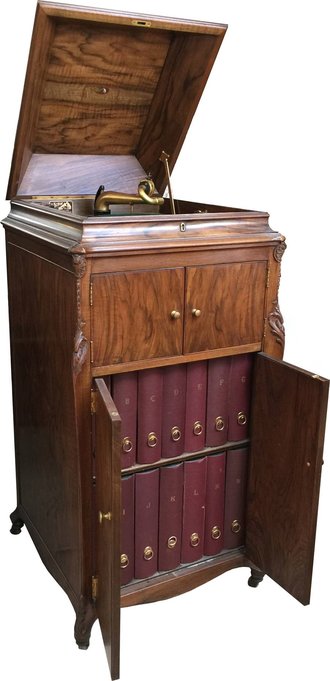
Victrolas originally made in high volumes have tanked in value. As an example, a well-maintained original Victrola XIV Type E in mahogany (the most common finish) would easily bring $800.00 back in 1995; today an identical example would struggle to sell for $150.00. For common phonographs like the XIV, we are facing a completely saturated supply situation, so most collectors are limiting their searches to rare or unusual machines. But this does not tell the whole story; rarity alone does not determine price. As an example, in 1995, a very rare VV-107 (only 1,007 produced!) could easily be sold for $2,000.00. Most collectors had never seen one, so demand skyrocketed. Today, that same machine would be lucky to bring $500.00, and may sell for even less. Why is this the case? 1) many examples have turned-up via online sales and 2) it is a rather boxy, uninteresting machine. In other words, a lack of appeal.
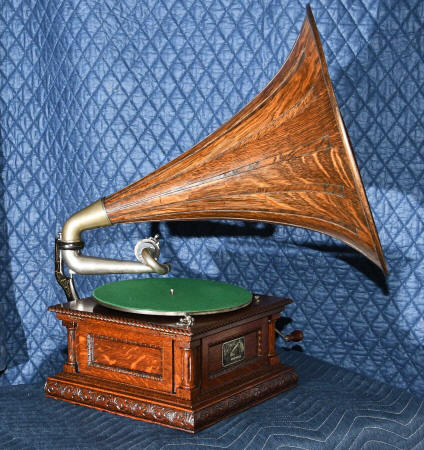 However, a Victor D, which was made in much higher volumes, still has significant demand and prices have held-up well. It is a gorgeous machine, with a large external horn, and shows magnificently to everyone. Great examples can still bring upwards of $5,000.00. So rarity is important, but not everything.
So what do collectors want today?
- Quality. A machine that looks and functions well in all respects.
- Originality. A good-to-mint original finish. A machine that has not been altered.
- Attractiveness. Something that shows well, and creates interest.
- Emotional Appeal. A machine that 'connects' with the buyer.
- Rarity. Something that is not found in droves on Ebay or Craigslist.
 Few collectors today are willing to pay for significant restoration work. For example, if a professional, authentic restoration of an unusual Victrola model would run $4,000.00 (which is about what it costs today), it makes more sense in most cases to wait for an excellent original machine to show-up at auction, which may be purchased for far less. Between 1997 and 2015, we operated one of the leading phonograph restoration services in the country, serving many serious collectors and museums. The market began to decline in 2006; ten years later our restoration orders had dropped by more than 50% as collectors chose to find good originals at declining prices rather than pay for restoration. Given inflation and EPA restrictions on high VOC finishing materials, restoration costs have since almost doubled.
The closing statement we make in every phonograph appraisal is as follows:
"Current Fair Market Value is the statistical mean of realized transaction prices for comparable examples, based on a significant sample population of transactions in the recent past, with neither buyer or seller being required to act, and both having reasonable knowledge of the facts"
That says it all.
We wish we could predict that the premium prices of the 1990's will soon return, but this kind of growth is unlikely for the foreseeable future. We must motivate and grow a new generation of collectors to increase the demand. It is disappointing to note that most young adults have no exposure to (or interest in) acoustic phonographs. The majority of 'Millennials' are barely familiar with audio cassettes and have no recollection of 45 RPM records from the 1960's; consequently, Victors and Victrolas from 1910 are only ancient curiosities. In addition, younger people rarely have discretionary money in their budgets to purchase expensive collectible items, especially given the amount of debt that is often carried today; any surplus funds in the budget are spent on technology and/or travel.
Our pricing is guided by current market values. Bear in mind that, if you buy a nice Victor V on Craigslist or Ebay, there is no guarantee if the motor locks-up one year later. There are often no assurances that the seller is knowledgeable in the hobby, and is representing the machine correctly. To be honest, many online sellers have no idea if their machines have been refinished (and the value penalty that entails), or if parts have been swapped from other machines. Our pricing must take into account that the motors and soundboxes have been overhauled, that everything on the machine is correct, and that it is clearly described. And that the machine has a 2-year warranty. Yes, we charge a small premium for this, but it also mitigates significant risk for the buyer. We offer good value on unusual or exceptional original machines. We focus on honesty and fairness.